Showing posts with label Sardinia. Show all posts

Tuesday, 18 June 2013

Sardinian Birds 2013 - Final installment

This will be the last in my series of photographs of Sardinian birds. I've not run out of photographs, it's just that it would get a bit repetitive if I shared any more (and really out of date!).

I'm also expecting the bird ringing to pick up (first juveniles of Robin, Dunnock, Blackbird, Chaffinch and Great Spotted Woodpecker have been ringed), especially as the juveniles are beginning to fledge - even if the wind is reducing the catch or preventing me from getting out at all. There is news on the ringing front to come soon, but first:

Above: Bee-Eaters. We saw a number of these and found that they prefer cultivated land.

Above: Grey Wagtail. Seen by the spring at Su Goroppu (a gorge), this bird was very showy (presumably well used to lots of people as this is a very well visited site).


Above: Grey Wagtail. The hole in the rock above the bird was, presumably, a nest site as the bird disappeared inside for more than a minute (either that or a good source of insects!).


Above & Below: Flamingo. Strange looking birds, but nice to see in the wild. The pink in the wing is striking when seen in flight when they look almost comical!

I observed the birds appearing to scrape the bottom of the lake with their feet whilst feeding (presumably to disturb the food making it easier to catch - interesting behaviour. They also, from time to time, had arguements (either this or displaying to eachother) - puffing up the feathers on their back (almost swan like) and gesturing with their neck - occasionally making contact with bills.


The holiday in Sardinia started and finished with this species and is therefore a good place to end.

Saturday, 1 June 2013

Again with birds from Sardinia

The bird ringing is still going slow and no juveniles have been caught yet so it's no wonder that I haven't stopped looking back at my bird photographs from Sardnia just yet!


Above: A Wood Warbler

This lovely little bird was awaiting us after a long walk uphill from one of the beaches we visited. We got back to the car park and were taking on board drinks when I saw it and decided to see what it was. Surprisingly, it let somebody (not me) within about a metre before flying off. I follwed it as it fed around the rocks next to the car park, bouncing around and flying from one rock to the next.


Above: A view of the rear of the Wood Warbler.

I like the way all the primaries, secondaries and tertiary feathers can all be seen, and that its head is to one side as though it's contemplating where the next meal is!


Above: Side view of the Wood Warbler.


Above: A Firecrest

A terrible photograph (the bird was too close for the camera to focus!) - but none the less the bird can be identified as a Firecrest. The long walk was worth it just to see this bird! At the end of this walk was the Wood Warbler (as above).


Above: A Hooded Crow

Whilst scouring the beachfront restaurants for (cheap) places to eat, I watched this Hooded Crow walking and hopping around the rock pools. I found this to be interesting behaviour...


Above: This is the exact point when the Hooded Crow picked out a crab from the rock pool!

On the second to last day, we went out for a pre-breakfast walk to the river in Orosei where there were plenty of birds flitting around including Cetti's Warblers, Jays, Turtle Doves and more Coot & Moorhen than we'd seen at countless other water sites.

The best find wasn't mine though as my dad got there first...


Above: How many Night Herons can you see in this photograph? You should be able to find a handful of them...

I guess it was a family party. They didn't move and it took me a while to realise there were five, but good views were had.

And that's it until next time when I'll continue the found in/near water theme.

Monday, 27 May 2013

Sardinia birds

Another random selection of photographs of birds from my holiday in Sardinia (mid to late April 2013).


Above: A Woodchat Shrike (commonly seen in Sardinia)


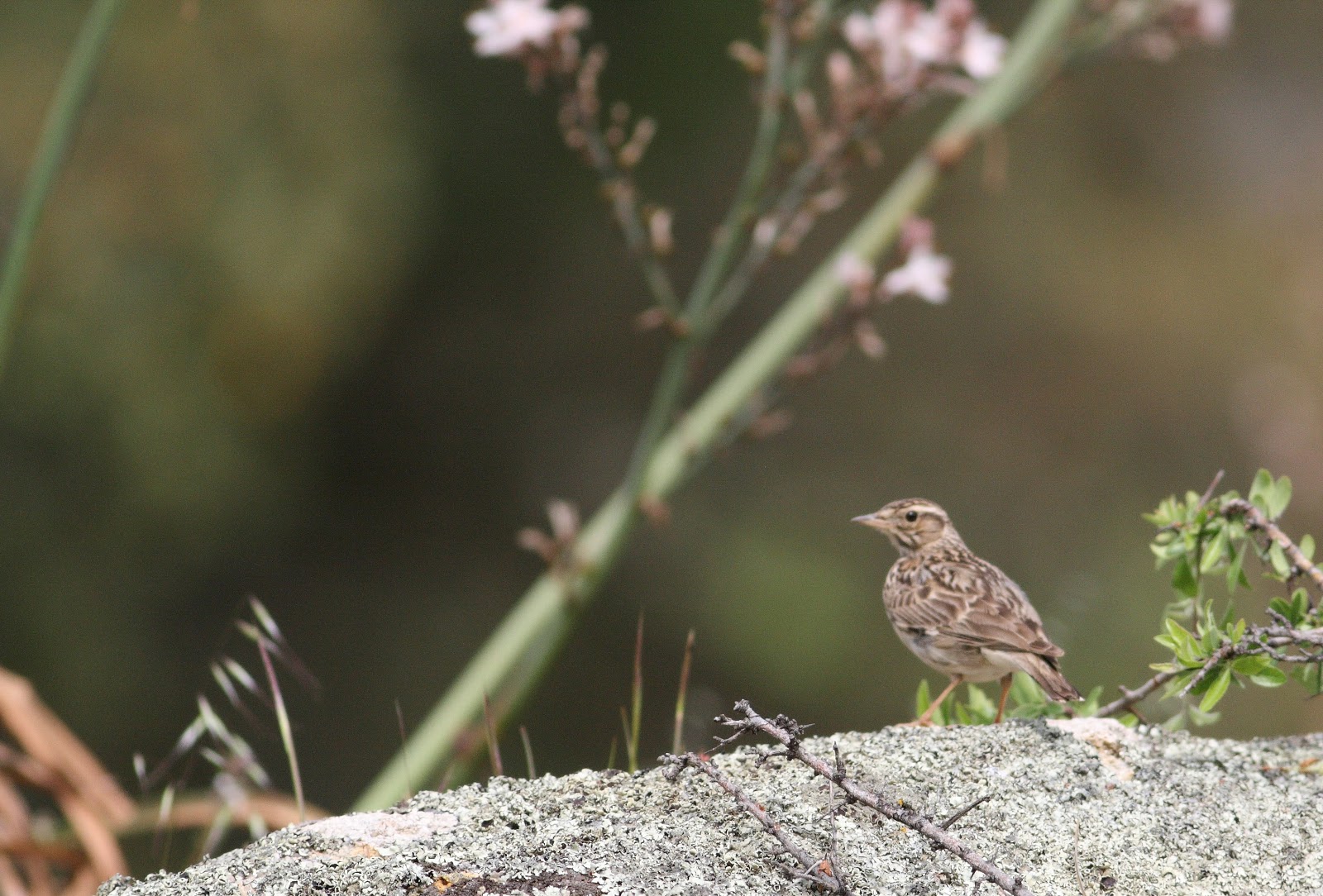
Above & Below: A Woodlark (we only saw 2 or 3 individuals)


In the top photograph, the diagnostic 'light, dark, light' patch on the edge of the wing is visible as is the eye stripe that joins at the back of the head.


Above: The Woodlark on top of the tree.


Above: A male Chaffinch. Good enough to put a bookmark!


Above: A different male Chaffinch feeding, on what I assume, are seed pods.

If you think that a Chaffinch photograph is a little out of place amongst the other photographs of birds from Sardinia, you'd be right. But I like the way birding is random activity, especially when exploring new places. You never know when you're going to get a good photograph or see a good species. One minute you could be watching a Chaffinch, next a ...


Above: Golden Oriole. This represents my best ever view of one (through the camera lens!).

Arbatax (not a place I would recommend to tourists to visit) is a port (air & sea) with a large, unkempt industrial area, next to a residential area (where we stayed for a night). A walk round the area was largely uninspiring with few highlights until, on the edge of the industrial estate, a flash of yellow flew by. This eucalyptus tree, in a car park, was its destination. This was the only photograph I got but I'm glad I got it! It slinked away very quickly.

I went with the procedure 'get the photograph and then look through the binoculars' (though in this case I was too late with the binoculars). I didn't see any other Golden Oriole's all holiday, so the walk was worth it!

There's more to come at a later date!

Tuesday, 21 May 2013

Another installment of birds from Sardinia

With quite a range of photographs to choose from, I was left wondering what to post next. I have quite a few photographs of birds from Sardinia I want to share with you, so I thought why not start with one that's named after the island.


Above: A Sardinian Warbler.

In the past, I've found this species very difficult to photograph as it skulks, usually on the other side of the scrub/tree it's in. They're all over the place in Sardinia and if not seen, they can often be heard. They do pop out of bushes onto prominent positions, but normally very briefly before disappearing back inside (especially if they see you!). So briefly in fact, that by the time the camera is up into position and trying to focus, that's it. Gone! And following them is normally a fruitless activity as is predicting where they might come out next!

I struck lucky with this one.


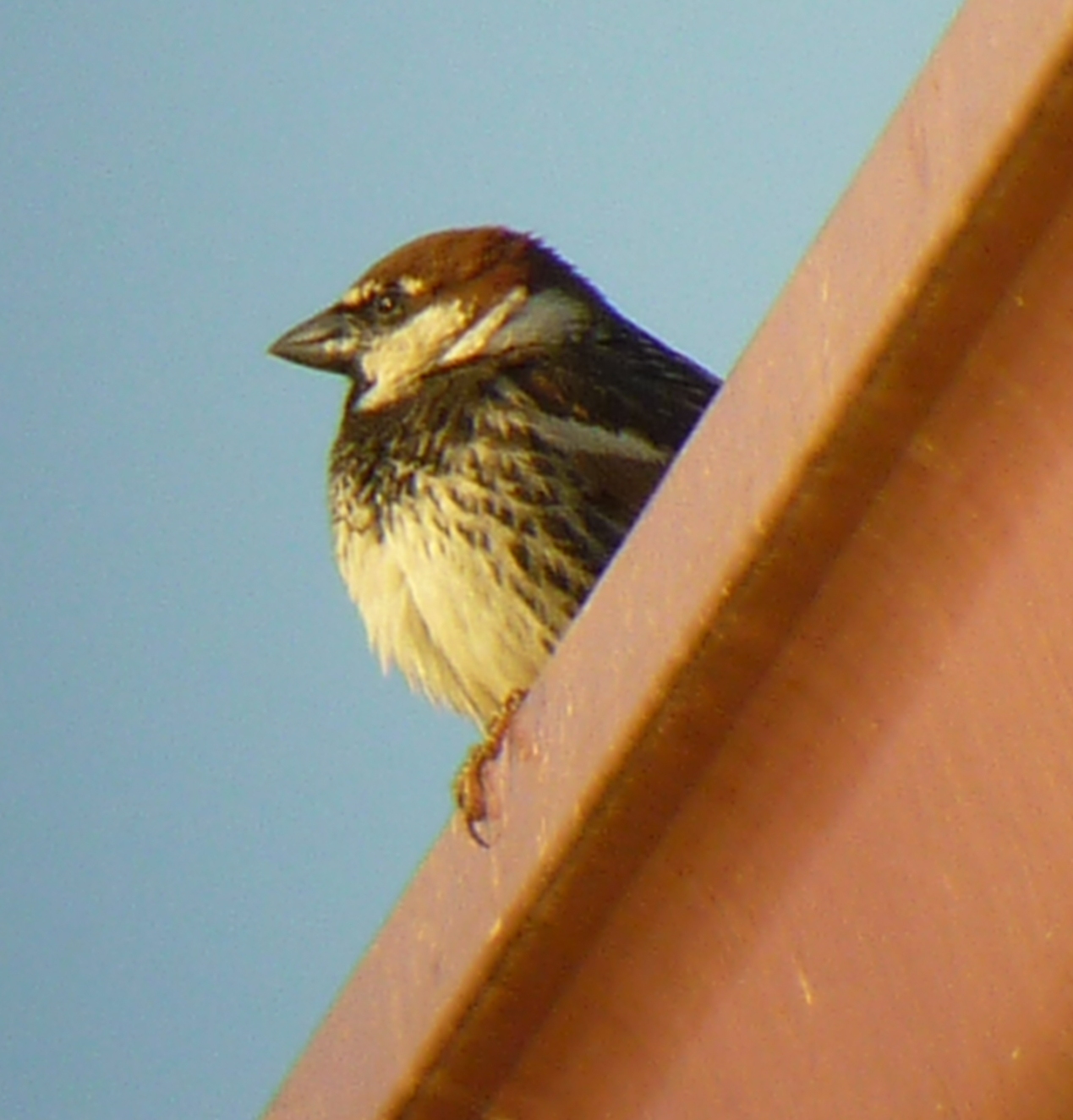
Above: A Spanish Sparrow. Common as muck here. If you're brave enough to sit outside when at a restaurant/bar, watch they don't steal your food!


Above: A Tree Sparrow.

Not very common in Sardinia as far as I can tell but I did see a few individuals around the place (all in urban areas). I wasn't going to post this photograph but the mirror it was perched on made the photograph rather unusual and interesting. Pity I didn't realise at the time otherwise I would have got more of it in the shot (perhaps a reflection of me too!) but then it adds to the mistique - you can imagine for yourself what the rest of the building looked like!


Above: Is it unlucky if a Greenfinch crosses your path? I doubt it, but this one did. we even followed it for a short way. Whilst walking around this area near Villasimius, we were treated to a couple of ravens cronking & displaying in the wind. All the other pictures in this post were taken in/around the same area.


Above: An obliging female Winchat. I had my scope out whilst watching this bird and got a bit of a shock when a Common Redstart popped up behind it and disappeared almost as rapidly! Winchats appeared to be relatively common in Sardinia (at least at the time I was visiting). At the waters edge (behind the Winchat) was a pair of Black Winged Stilts and we'd already been treated to several Kentish Plovers. A pleasant diversity of birds.

I wanted to leave you with something to laugh at... at least I hope you will...


Upon leaving Villasimius we encountered the above traffic jam! The only one of the holiday - other than the ones we caused through slow driving! And yes, the goat on the left is relieving itself!

Sunday, 19 May 2013

A few teasers from Sardinia...

It's taken a while, but I've finally got some photographs to show of the birds I saw in Sardinia. Eventually I realised I'd taken the pictures in .RAW format (rather than .JPeg) and they needed converting before I was able to view, edit and present them.

So, without further ado...


Above & Below: A male Subalpine Warbler.


The Subalpine Warblers were very elusive. I only saw 2 and they both showed briefly deep in scrub. I was lucky to get photographs of this one, but what a stunner!


Above: One of my favourite pictures from the holiday shows a female Pied Flycatcher (I only saw 2).

80 + species were seen on this holiday (starting & ending with Flamingo's!). There was only one species I had never seen before (photographs of this bird to follow later), but as I'd been to Sardinia before, this wasn't a great surprise.

Reflecting on the quality of birding in Sardinia, I think it is a country well worth visiting however a hire car is essential and to see a wide variety of species, you'll need to visit a good variety of habitats including costal sites, lakes (however many of the lakes seemed largely devoid of birds), scrubby sites, high mountains and urban areas. There were interesting species everywhere - including in unexpected areas. Our tactic was to go on walks (rural and urban), visit tourist places, visit lakes (mostly costal inlets & small estuaries) and stops at random places.

The south east coast was good, but there are key species that we weren't able to catch up with as the north and north west are better areas according to other information available online (however this may be because it has had better coverage from serious birders). Perhaps we will go back in a future year to try and catch up with some different species (Golden Eagle, Ibis, Little Bustard) but we're thinking it will be the much cheaper option of Majorca next year.

Finally, I have to apologise to my regular readers for a glaring error on my part relating to a previous post of mine (here) where I told you about the 'parental abuse' pace I set whilst walking back from a Gorge in Sardinia. I was reminded and chastised by my father for failing to mention that I also forced him to carry the rucksack all the way back to the car. My shame is now complete.

However, in response, I say boo hoo! You'll have to imagine the appropriate sarcastic gestures! To complete the full picture for my readers, I will have you know that I carried the bag all the way there (uphill) & around the gorge (whilst climbing rocks!), for a much longer time and with full bottles of water + binoculars and camera!

It's back to photograph editing now for me (holiday & ringing) and crunching the numbers from this weekends ringing sessions (highlights being a control Whitethroat, an unseasonal Lesser Redpoll and a couple of longevity records for the site).

Saturday, 4 May 2013

Stunning Sardinian Scenery

Now that I'm back safely from Sardinia, I've started going through the photographs and thought I'd start with some of the stunning scenery that we saw. We flew into Cagliari in the evening and after staying one night there, we stayed at various locations on the east coast starting in the South East corner.

There was plenty to see and we certainly didn't have time to fit it all in, but the majority of the places we went were worth going back to!


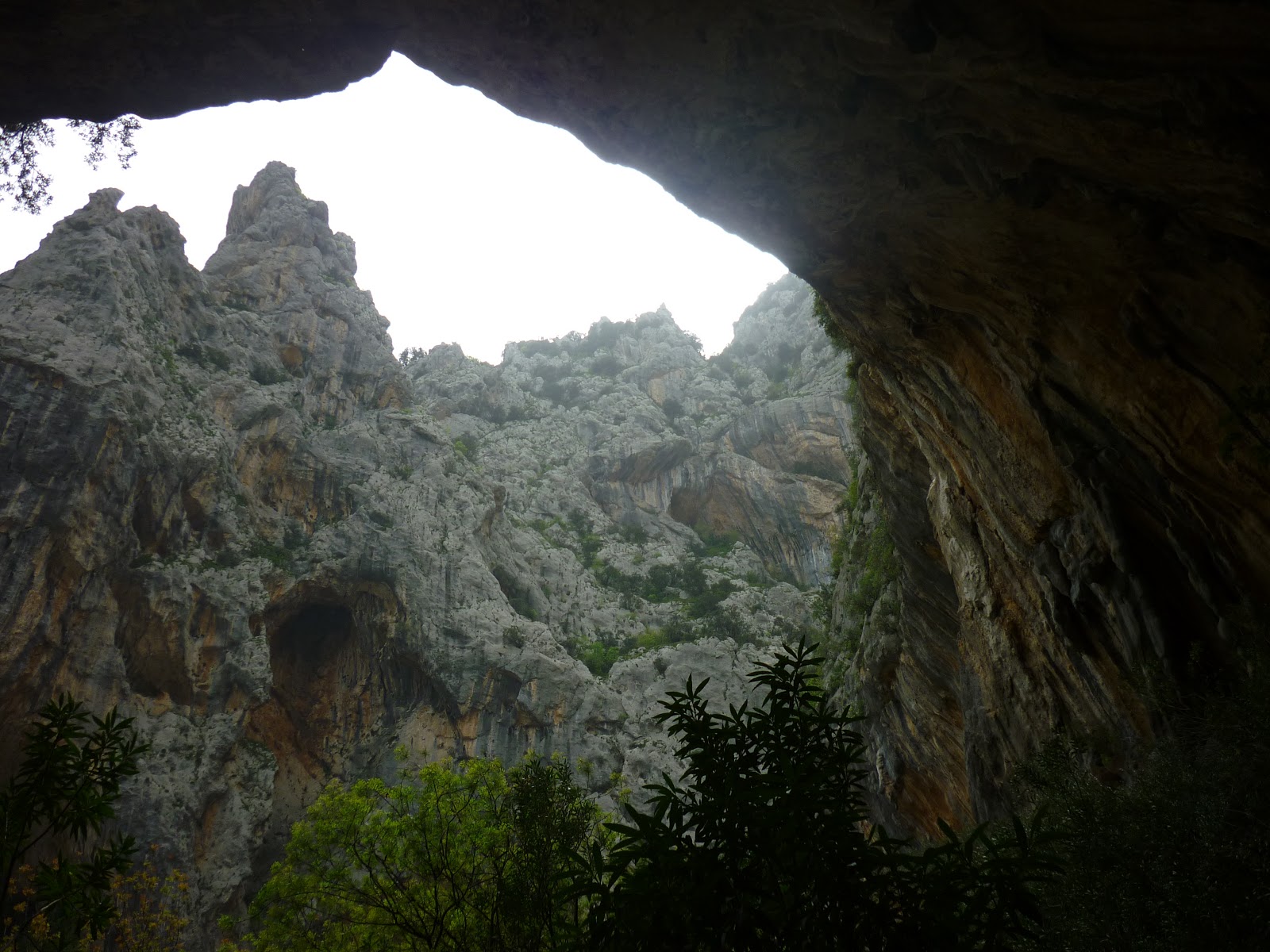
Above: After a walk of just under 1 hour and 30 minutes to walk about 5km (it wasn't the hardest walk that we did) from the nearest car park, we got to the Gorge at Su Gorropu. We must have spent about an hour climbing over, around and under rocks inside the gorge (where Crag Matins, Grey Wagtails, Spotted Flycatchers and Blue & Great Tits were present). Local wildlife (though we didn't see them) included extremely rare flowers (i.e. only 20 - 40 existed in the world in only this location), Peregrines & Golden Eagles and Salamanders.

To completely navigate the gorge (1.5km long) would have been impossible without proper climbing gear and guides but the views we got were more than worth the walk and entrance fee.
I set a fast pace on the way back to the car (mostly down hill - I couldn't have done it uphill) and we made it back in 1 hour & 5 minutes. Some of the younger & fitter people we overtook (especially on the uphill sections), must have been stunned at our pace. My dad remarked that the pace I set was called 'parental abuse' - he managed it though!


Above: This is a spring at Su Gologone. Apparently 25,000 litres of water a second can come out of this spring - even more in times of flood! The water comes from deep under the mountains. After a gruelling trek to Mount Tiscali, this was a very nice bonus.


Above: We did the trek to Mount Tiscali the hard way and this is the view from an early part of the walk.

Without clear directions or map to follow (or clear signs - a real problem in Sardinia when trying to find places of tourist interest), we guessed at the best way to get there. The Sardinians would prefer that we pay proper guides to take us to Mount Tiscali but the reality is that this costs rediculous amounts of money and is largely unnecessary (unless you have money to waste and/or really need somebody else to make sure you get there). You do need to be quite fit though to constantly walk steeply up hill for an hour or more in the heat/sunshine.

Afterwards, we realised the way we chose was the most difficult and steepest!


Above: My dad climbing the route to Mount Tiscali! This was the steepest/worst bit. Had it been any steeper, rock climbing equipment would have been needed!

Although we weren't following a signed route, we were on a route that was clearly used and where landrover access finished, it was marked with piles of stones. However, with a lack of signs, we got a bit lost until we came across some Sardinian walkers who kindly showed us the way. Even then it was a long trek downhill (the opposite side of the mountain from where we started) before going up again!   Thankfully we made it and the trek back was on a recognised route and all downhill.

In the UK, OS maps are far more detailed but we couldn't even rely on the Sardinian maps showing all the roads, let alone the footpaths!


Above: Another tough trek through the hillside, this time to an isolated beach called Cala Goloritze - you can see all but about 5 square metres of the beach in the photo. It is favoured by the yachting fraternity as this is an alternative and easier way to reach it! Apparently, it's a very crowded beach later on in the year, but being tiny - there's little wonder why! On the way back 'uphill' 2 Firecrests made a very welcome appearance! And upon return to the car park, I found a Wood Warbler!

We visited a number of tourist attractions such as Nuragic (bronze age) villages, beaches, gorges and springs and they mostly had this in common:

You either started your walk from high up and went down a long way and then back up afterwards or you started low down and went somewhere high up and then had to come back down again (the latter being easier).

All walks had hard rocks underfoot - except where we made it onto a beach that had sand!


Above: A peaceful & picturesque site.

Whilst making our (meandering) way to a specific Nuragic village, we stopped to eat our lunch at a scenic location (with so many around, stopping somewhere with little to see seemed silly). There were signs to a different Nuragic hillfort/burial place of some sort where we stopped and whilst investigating this, we stumbled across a lovely site with wild flowers, grassy areas and a variety of scrub, trees and rocks. It was like a landscaped garden only better and (presumably) natural - though there was a church and stone picnic benches around. The photograph really doesn't do it as much justice as it should.

In the peaceful surroundings of this site, I managed to see and photograph a Woodlark (the first for the holiday) and a Pied Flycatcher (2nd and last of the holiday).


Above: A beach at dusk near Villasimius in the South East of Sardinia. A very attractive beach and I think the sunset made it even better.


Above: The beach at Villasimius from above. Between the beach and the first strip of green (on the left) is an area of water where we found several Kentish Plovers. I have found that this species likes salt water environs, beaches and dunes.

You may have noticed the clouds in the last photograph - this was a regular feature of the holiday and on a couple of mornings, it rained. It was also very hazy, even when it was wall to wall sunshine. I think this was at least in part, due to the amount of dust/particles in the air as when it rained, it left a lot of dust on the car!

Photographs of some of the birds I saw will follow soon.

Sunday, 22 May 2011

Sardinia Birds 3

This will be the last update on Sardinia Birds (for this year!).


Above & Below: Zitting Cisticola (Fan-Tailed Warbler).


I saw these in Menorca last year but never got a good view. The two phographs above were taken on the last day where we visited the salt pans virtually next to the airport. It was well worth the visit and at one point, a Zitting Cisticola was so close I couldn't focus the telescope on it. I found them in the long grass along a fence line and the second photograph was taken as I was observing it moving in and out of the cut grass left on the ground looking for food.


Above: Slender Billed Gull

Having not connected with this species anywhere else in Sardinia (not that we tried specifically), we had read that this species was to be found at the same salt pans. This bird was not overly bothered by our presence and was the only one I saw - if only some of the other birds I saw would pose long enough for a photograph!

Unfortunately, I was not confident of my ID but I am fairly sure we saw a Black Kite here too.


Above: Kentish Plover. Beaches with sand dunes was where I found many of these (including 8 on one beach). Photographing them can only be at distance as they scurry away if you get anywhere near them! I also saw a few at different salt pans (also where I saw one in Menorca).


Above: This Curlew Sandpiper was on this pool on the same beach as the 8 Kentish plovers. The fading light wasn't good for great photographs though.


Above: Winchat. Probably the best photograph of the holiday.


Above: Horned (Shore) Lark. I left probably the second best bird (and the most unexpected) until last.

Walking along, a bird flew from the rocky shore to my left, across the very small headland to the other side. In a situation where any bird I find could turn out to be interesting or something I've never seen before, I'd have been annoyed with myself had I not checked out what it was. Once I'd seen it in the scope, I said "Dad, we're definitely interested in this bird!" The very obliging bird posed for quite a while in the end. Not sure if these are resident or passage migrants in Sardinia or very rare. Collins bird guide suggests this might be a rare record. I certainly didn't read anything before going suggesting you could see this speceis here.

I should do something to try and find out ...

Sardinia birds 2

There are a lot of suitable sites to watch birds in Sardinia but you have to travel to get a wide range of species. And travel takes time in Sardinia. We could only find 1 to 200000 scale maps (OS maps are 1 to 25000 in the UK) and these weren't that helpful by not showing all the roads!

When the map indicated that the route we wanted to take was going straight on through a town, we often found that due to chaotic one way systems, the actual route was far from straight forward. The lack of signs at major junctions was also not very helpful. And I don't recommend short cuts as you'll soon find yourself lost!

Wildlife tourism here is possible, it's just that signage, directions in literature and information are often hard to come by. Knowing enough Italian to ask for directions & understand them is essential!

Species such as Spanish Sparrow and Hooded Crow were very easy. But Crag Martin and Citril Finch took some travelling to find (slow going up & down those mountain roads) although this may have been just a result of the places we chose to travel to!


Above: A Woodchat Shrike.


Above: Spotted Flycatcher. Whilst sitting in the picnic/cafe area of a 'cultural location', a pair of Spotted Flycatchers were flitting around very close by. It was rude not to take a photograph!


Above: A Wheatear. I only saw this species above the tree line whilst walking up to the top of the highest mountain in Sardinia.


Above: Citril Finch. Again, only recorded above the tree line whilst walking up to the top of the highest mountain in Sardinia. It took us a long time to drive there, but once parked, it took only a minute to find these small finches.


Above: Funny story - the first species I saw on the holiday was a Starling. The plane had been on the ground less than a minute! But it was bothering me for several days. I kept on seeing Starlings but in my mind, I was questioning this ID. "They're a bit black" I was saying to myself. "They can't be blackbirds can they? No, I'm sure they're Starlings." But I'd not seen them up close because when I saw them, I/we were driving and they were at a distance. Anyway, when I finally looked up Starling in the book I found there was such a thing as Spotless Starling! My mind was easier but it still took a day or two to 'spot' one and confirm their spotlessness. The photograph (above) doesn't really show it very well.


Above: Hooded Crow. My holiday was punctuated with many shouts of 'what's that Edward?' My standard reply was - another Hooded Crow dad!


Above: Jackdaw. Whilst the hooded crow was common, this was only one of 2 Jackdaws seen (the other being at the same time as this one). The Hooded Crow (pictured above) and this Jackdaw were vying for position on the telegraph pole.


Above: Spanish Sparrow - this bird was one of many nesting in the roof of our hotel. They were everywhere and were by far the most recorded species on the holiday.

More to come yet!